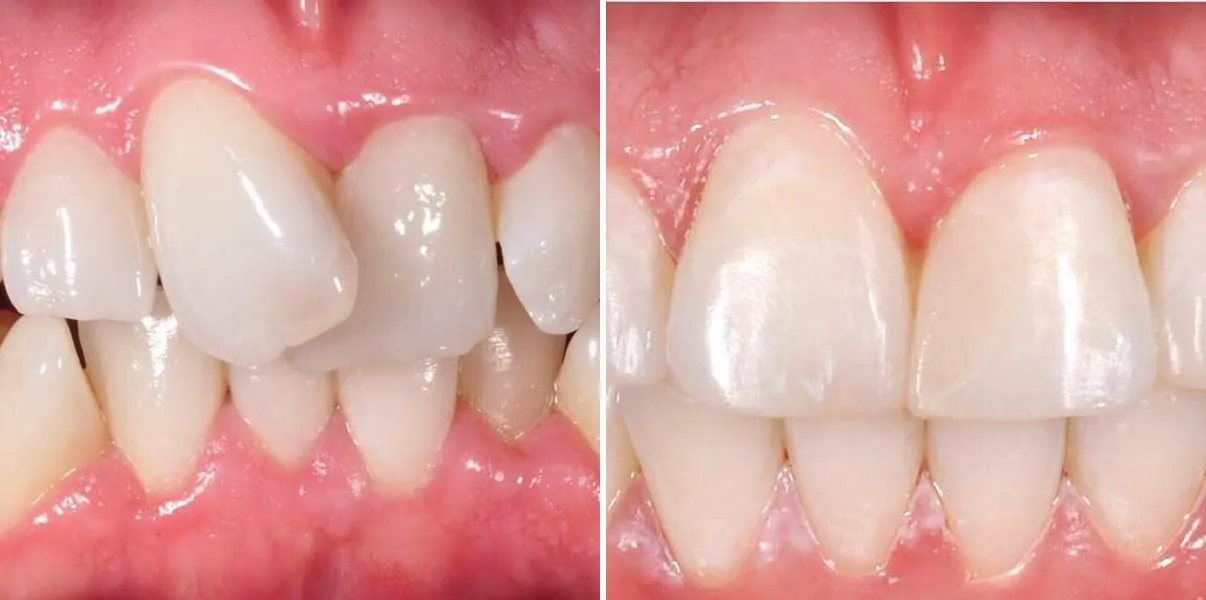
 BeforeAfter
Problems orthodontics can help with
- Crowded or overlapping teeth
- Gaps between teeth
- Protruding front teeth
- Overbite, underbite or crossbite
- Teeth that have shifted after previous treatment
Straightening teeth is not only cosmetic. Teeth that are lined up properly are easier to brush and floss, which helps protect against decay and gum disease.
Your options
Metal braces are the most established option and work well for a wide range of cases, including complex ones. Ceramic braces work the same way but use tooth-coloured brackets that are less noticeable. Clear aligners are a series of removable, nearly invisible trays that move teeth in small steps; they suit many mild to moderate cases and need to be worn for most of the day to work.
Not every case is suitable for aligners, and not every patient wants fixed braces. We will look at your teeth and bite, discuss what matters to you, and recommend the option most likely to give a good, stable result.
Are braces only for teenagers?
No. Teeth can be moved at any age as long as the gums and bone are healthy. Many adults choose ceramic braces or aligners because they are more discreet. Before starting, we make sure any cavities or gum problems are treated first.
What treatment involves
It starts with an examination, photos and impressions or scans so we can plan the movement. Treatment length varies with the case, commonly from several months to around two years. You will have regular review visits so we can adjust the braces or give you your next aligners.
Once your teeth are straight, wearing a retainer is essential. Without one, teeth naturally tend to drift back. We will explain how and when to wear it.