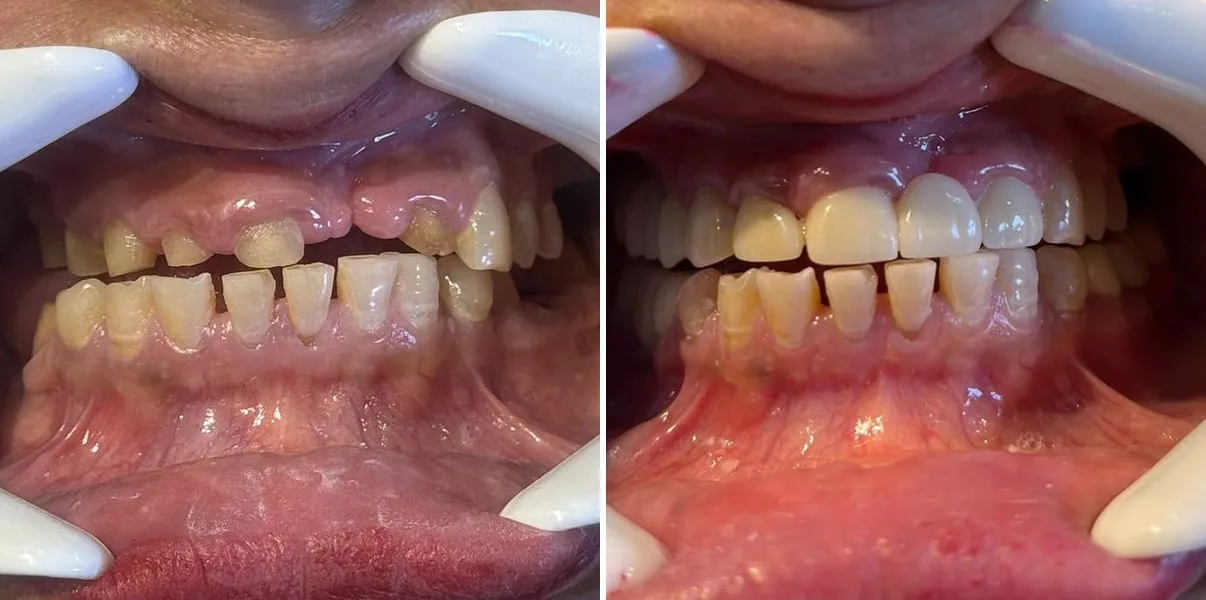
 BeforeAfter
When a crown is the right choice
A crown may be recommended when a filling alone would not be strong enough. Common reasons include:
- A tooth that is cracked or has a large broken section
- A tooth with a very large or failing filling
- A back tooth after root canal treatment, which can become brittle
- Worn, discoloured or misshapen teeth as part of a smile makeover
- Covering a dental implant
Zirconia or porcelain?
Zirconia is very strong and is a popular choice for back teeth and for patients who grind. Modern layered zirconia and porcelain crowns can also look very natural on front teeth. We will recommend a material based on where the tooth is, how you bite and how it needs to look, and explain the trade-offs clearly.
Why we trial-fit every crown
Once a crown is cemented it is permanent, so it needs to be right first. Before cementing, we try the crown in and check how it fits at the margins, how it meets the opposite teeth when you bite and chew, and how the shade looks in natural light next to your own teeth. If anything is not right, it is adjusted or sent back to the lab.
This extra step takes a little more time, but it is the difference between a crown that feels like your own tooth and one you notice every day.
What to expect
Treatment usually takes two or more visits. At the first, the tooth is prepared and an impression or scan is taken, and a temporary crown is fitted. At the next visit the final crown is trial-fitted, adjusted if needed, and cemented. Bridges follow a similar process using the supporting teeth on each side of the gap.
Crowns and bridges are cleaned like natural teeth. For bridges, we will show you how to clean underneath the replacement tooth with floss threaders or small brushes.