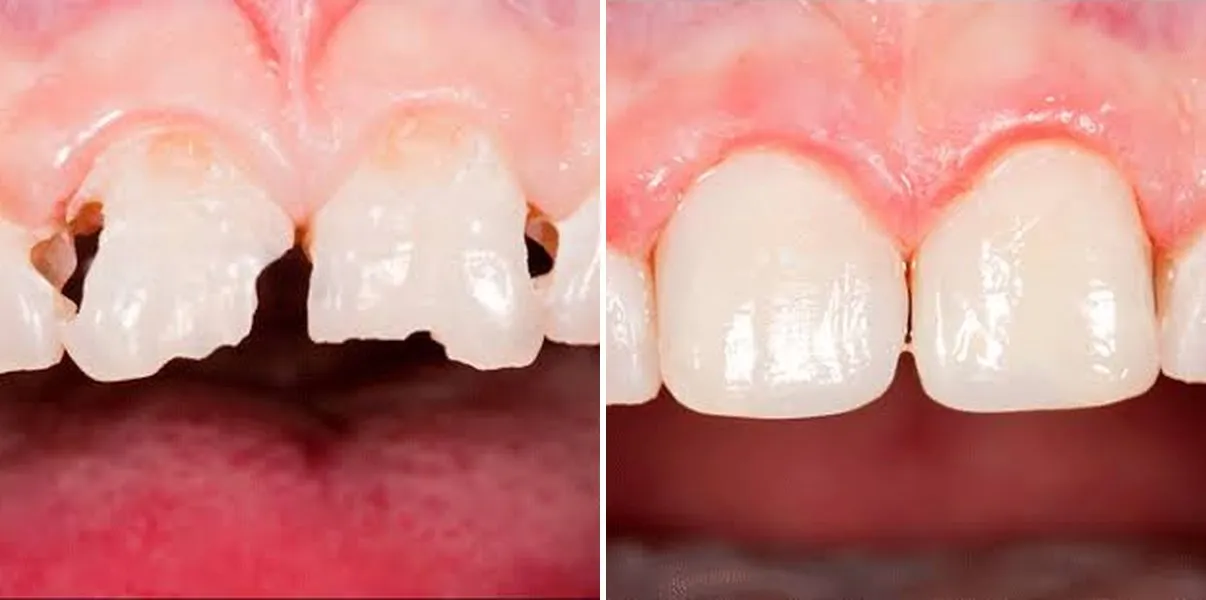
 BeforeAfter
When do you need a filling?
Fillings are used to repair teeth damaged by decay, small fractures or wear. Signs that you may need one include sensitivity to cold or sweet foods, food getting stuck in the same spot, a rough edge you can feel with your tongue, or a dark mark on the tooth. Some cavities have no symptoms at all and are only found at a check-up.
Treating a cavity early usually means a smaller, simpler filling. A cavity that is left to grow can reach the nerve and may then need a root canal and a crown.
How a composite filling is done
- Numbing: the area is numbed so the procedure is comfortable.
- Cleaning: decayed or weakened tooth structure is gently removed.
- Shade matching: we choose a composite shade, and sometimes layer more than one, to match your tooth.
- Bonding and layering: the material is bonded to the tooth and built up in layers, each set with a curing light.
- Shaping and polishing: the filling is shaped to your bite and polished so it blends in and feels smooth.
Most small to medium fillings are completed in a single visit.
Why composite instead of silver fillings?
Composite bonds directly to the tooth, so we can often keep more of your natural tooth structure than with older metal fillings. It is tooth-coloured, which makes it a good choice for front teeth and visible back teeth. It can also be used to repair chipped edges and close small gaps.
Very large cavities or heavily broken teeth may be better protected with a crown or onlay. If that is the case, we will explain why and show you the options before anything is done.
Caring for your filling
You can usually eat once the numbness wears off. Mild sensitivity for a few days is common and fades. Brush twice a day, clean between your teeth and keep up regular check-ups so we can polish and inspect the filling over time. Tea, coffee and smoking can stain composite gradually, just as they stain natural teeth.