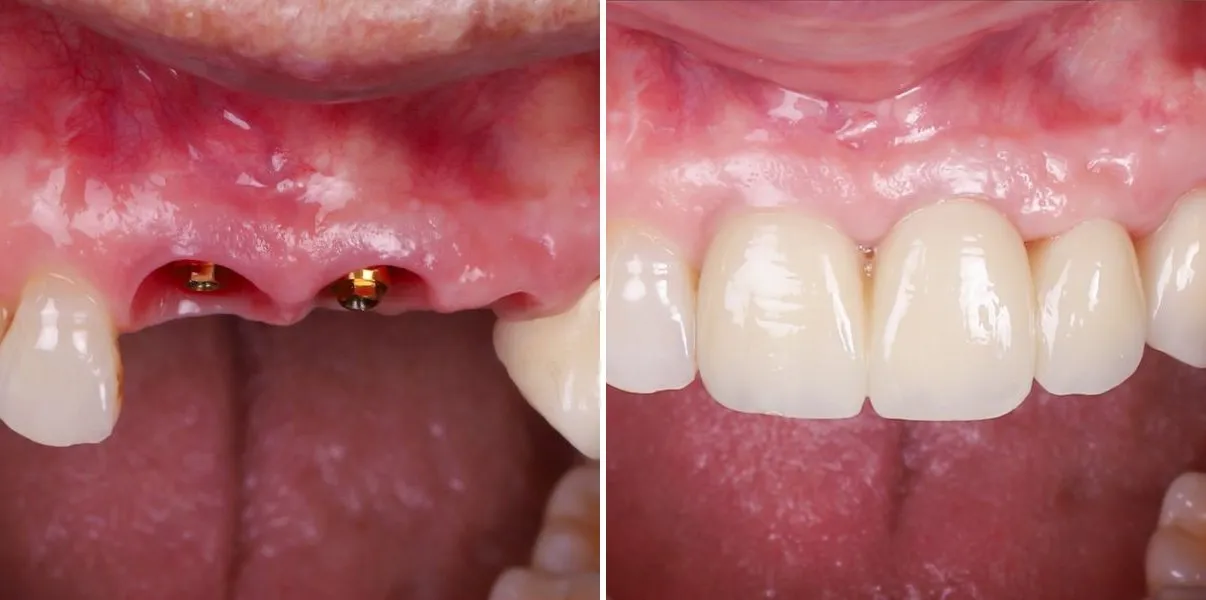
 BeforeAfter
Why replace a missing tooth?
A gap is not only a cosmetic concern. Over time, neighbouring teeth can tilt into the space, the opposite tooth can over-erupt, and the bone where the tooth used to be gradually shrinks. Chewing can also become uneven. Replacing the tooth helps keep your bite stable.
The main options are a bridge, a removable denture or an implant. Implants are often preferred because they do not require cutting down neighbouring teeth and they feel very similar to a natural tooth.
Am I a candidate?
Most healthy adults with enough bone in the area can have an implant. Some factors need careful assessment first, including smoking, uncontrolled diabetes, active gum disease and certain medications. In some cases, extra bone is needed before or during implant placement.
We will examine the area, take an X-ray or scan as needed, and tell you honestly whether an implant is a good option for you, along with the alternatives.
The implant process, step by step
- Assessment and planning: examination, imaging and a clear written plan and cost.
- Placement: the implant is placed under local anaesthetic. Most patients describe it as easier than they expected.
- Healing: the bone bonds to the implant over a period of weeks to a few months. A temporary tooth may be possible in the meantime.
- Final crown: a custom crown is made, trial-fitted for bite and shade, and fixed onto the implant.
Looking after your implant
Implants cannot decay, but the gum and bone around them can become inflamed if plaque builds up. Brush twice a day, clean between your teeth, and keep up regular check-ups and professional cleaning. With good care, implants can serve you for many years.